
When people think of château life near Paris, their minds naturally drift to Versailles, Fontainebleau, or Vaux-le-Vicomte.
And yet one of the region's most fascinating historic homes belongs not to a king, queen, or emperor—but to a woman who became one of the most famous artists in the world through her own talent.
Tucked away in the village of Thomery, on the edge of the Forest of Fontainebleau, the Château de Rosa Bonheur remains one of the most extraordinary cultural escapes within easy reach of Paris. Part artist's studio, part time capsule, part country retreat, it offers something increasingly rare: the sensation of stepping directly into another life.
At 56Paris, we are endlessly drawn to places like this. Paris's great monuments deserve their fame, of course. But some of the region's most memorable discoveries are the ones that remain slightly outside the spotlight—the places that reward curiosity.
The Château de Rosa Bonheur is exactly that kind of place.
A Woman Who Bought Her Own Château
The story begins with Rosa Bonheur herself.
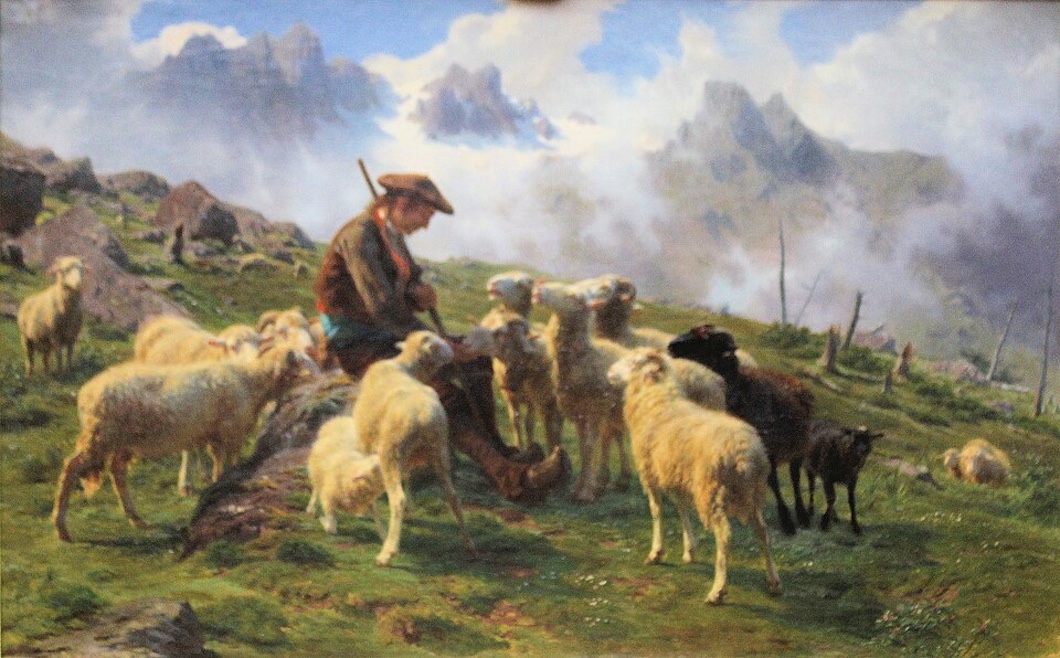
Today her name is once again receiving the attention it deserves, thanks in part to the major bicentennial exhibition devoted to her at the Musée d'Orsay in 2022–2023. During her lifetime, however, Bonheur was not simply successful—she was a phenomenon.
Born in 1822, she became the most celebrated animal painter of the nineteenth century. Her works sold internationally. Her exhibitions attracted enormous crowds. Admirers ranged from Queen Victoria to Buffalo Bill, and she became the first female artist to receive the French Légion d'Honneur.
Most remarkably, she achieved all of this on her own terms.
In 1859, thanks to the success of her monumental painting The Horse Fair, Bonheur purchased the Château in Thomery with the proceeds of her work—becoming one of the first women in France to acquire a significant property entirely through her own professional success.
She would spend the next forty years there.
In fact, Bonheur purchased the estate not merely as a residence but as a place where she could work on an unprecedented scale. She soon commissioned a vast studio, designed to accommodate the monumental canvases that had made her famous. Around it roamed the animals that fueled her imagination—horses, deer, sheep, dogs, and eventually even lions.
A Studio Where Time Stopped
What makes the château so captivating today is not simply the building itself, but the extraordinary condition in which it survives.
Since Rosa Bonheur's death in 1899, her studio has remained astonishingly intact.
An unfinished painting still waits on its easel. Her embroidered smock rests where she left it. Sketchbooks, brushes, palettes, notes, hats, boots—even cigarette stubs—remain in place. Visitors often describe the experience feeling as though the artist has merely stepped outside for a moment and might return at any time.
Unlike many historic house museums, there is very little reconstruction here. You are not simply learning about Rosa Bonheur. You are entering her world. As guides often remark, one can almost imagine the scent of turpentine mingling with the violet perfume she favored, lingering in the air.
Lions, Wolves, and an Early Environmentalist … Oh, My!
Rosa Bonheur’s world was anything but ordinary.
Bonheur shared the estate with an astonishing collection of animals—horses, sheep, deer, dogs, monkeys, wolves, and even lions. They served as both companions and subjects for her work.
Long before environmentalism became a movement, Bonheur was advocating for the protection of nature and the preservation of the nearby Forest of Fontainebleau. Long before animal welfare became a mainstream concern, she argued publicly that animals possessed souls.
Standing in her studio today, it is striking how contemporary many of her ideas feel.
She wore trousers at a time when doing so was controversial. She built a career in a profession dominated by men. She achieved financial independence through her art. She championed nature, defended animals, and insisted that talent had no gender.
More than a century later, Rosa Bonheur feels like a historical figure but also a startlingly modern one.
Thomery and Fontainebleau
Part of the pleasure of visiting the château lies in the setting itself.
The château sits in Thomery, a village long known for its famous Chasselas grapes, once supplied to the royal court at nearby Fontainebleau. The area is filled with reminders of a quieter France: old stone walls, forest paths, and traces of centuries of agricultural life.
Just minutes away lies the magnificent Château de Fontainebleau, one of France's great royal residences and a UNESCO World Heritage Site. Nearby Barbizon—the legendary painters' village that helped inspire the Impressionists—makes another natural stop.
Together they create the perfect weekend itinerary: art, nature, history, and some of the most beautiful landscapes in the Île-de-France region.
A Perfect Day Trip from Paris
One of the ambitions behind the Grand Paris project—a vast effort to better connect Paris with the surrounding Île-de-France region—is to make cultural destinations beyond the city center feel more accessible.
One of the most interesting developments in recent years has been how much easier it has become to explore places like Thomery.
With improved transportation links and the simplification of regional fares—including the recent €2.50 Navigo journey pricing that includes places like Thomery—escaping the capital for an afternoon of art, history, or nature has never felt easier.
As the region becomes increasingly interconnected, the city increasingly extends beyond its historic center. This reflects a broader reality of contemporary Paris: the future of Paris is not only found within the capital. It is also found in the villages, forests, museums, and cultural sites that surround it.
And few destinations illustrate that better than Rosa Bonheur's château.
Discovering Paris Beyond Paris
At 56Paris, we often encourage clients to think about Paris not simply as a city, but as a region rich with unexpected discoveries.
The Château de Rosa Bonheur reminds us why.
Less than an hour from the capital, you can step into the preserved studio of one of the nineteenth century's most celebrated artists, wander through the landscapes that inspired her work, and encounter a woman whose ideas feel remarkably current even today.
Not every treasure near Paris wears a crown.
Some carry a paintbrush.
Interested in finding your own footing in the Paris property market? Contact the 56Paris team for personalized guidance from our bilingual experts, based in the heart of the city.
For more stories, insights from the world of Paris real estate or just to stay in touch, follow us on Facebook, Instagram, YouTube, and Pinterest.