
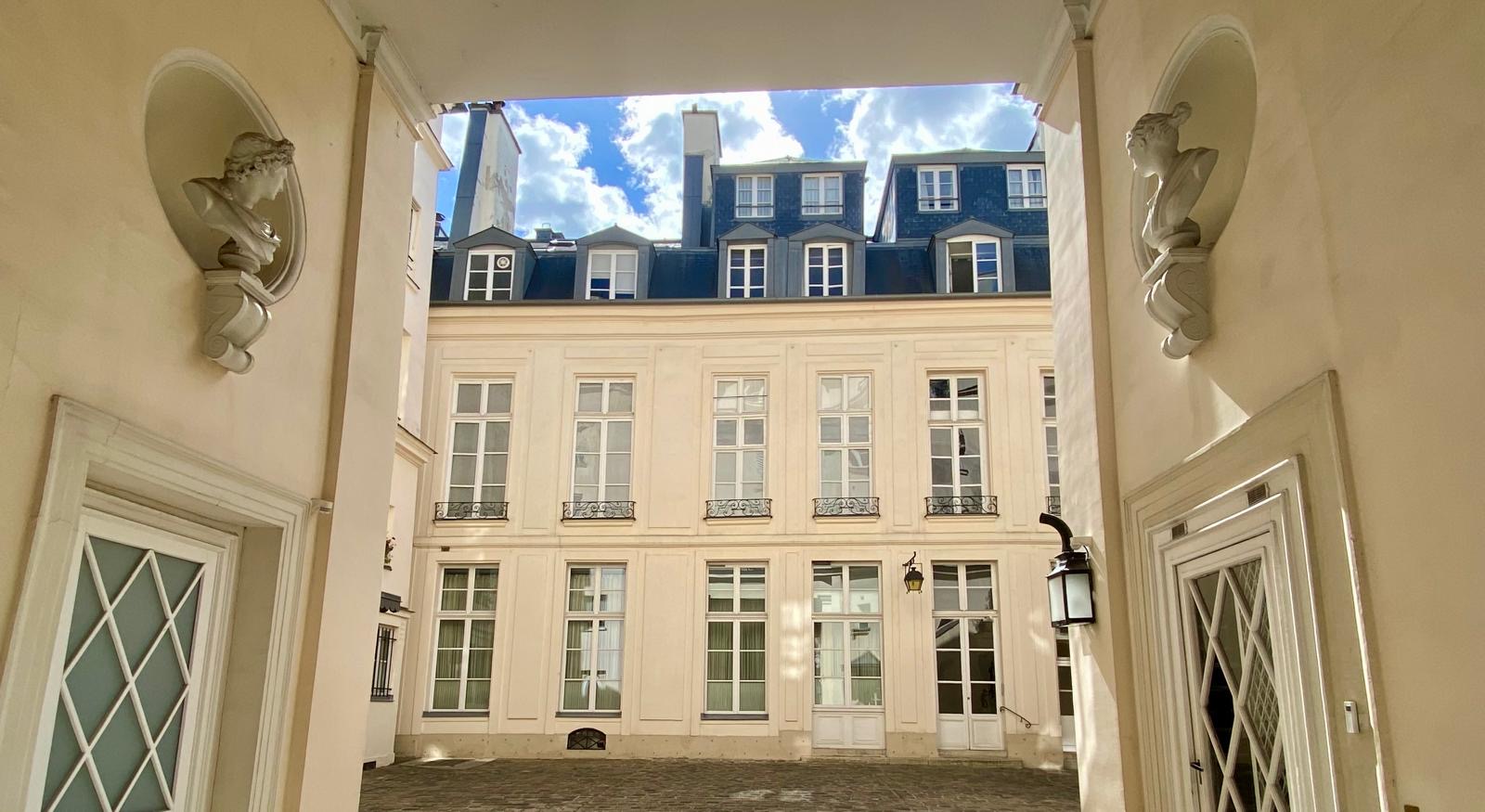
For many international buyers searching for a home in Paris, air conditioning sits high on the wish list. For some, it is as essential as an elevator or a modern kitchen. Then comes the surprise.
Finding a Parisian apartment with air conditioning is remarkably difficult.
Not because the technology does not exist, but because Paris has long resisted it—culturally, architecturally and practically.
Yet after another summer of prolonged heatwaves, with temperatures reaching around 42°C (108°F) for several consecutive days, the conversation is rapidly changing. The question is no longer whether Paris should embrace cooling solutions, but how.
Why So Few Paris Apartments Have Air Conditioning
Unlike cities such as New York, Miami or Dubai, Paris was never built with air conditioning in mind.
For decades, there was little need. Thick limestone walls, high ceilings, wooden shutters and natural cross-ventilation were usually enough to cope with the few hot weeks of summer.
Just as importantly, there has always been a deeply rooted cultural resistance.
Many Parisians genuinely believe that air conditioning:
* spreads germs;
* causes sore throats, colds and respiratory illnesses;
* creates unhealthy temperature differences;
* consumes excessive energy;
and is, overall, simply "bad for your health."
Whether medically justified or not, this perception has shaped attitudes for generations and continues to influence many co-ownership decisions today.
For international buyers accustomed to cooled interiors, this often comes as a surprise.
The Architectural Challenge
Even buyers willing to invest in a high-end air conditioning system quickly discover another obstacle: Paris itself.
Much of central Paris is protected by strict architectural regulations.
Many buildings fall under the supervision of the Architectes des Bâtiments de France, whose mission is to preserve the city's historic appearance. Visible outdoor compressor units are therefore heavily restricted—or simply prohibited—in many locations.
On top of that, any installation affecting common areas usually requires approval from the building's co-owners ("copropriété"), and obtaining that approval is rarely straightforward.
The result?
Even apartments worth several million euros often have no permanent cooling system.


Three of our clients' apartments after the installation of a discreet, professionally designed air-conditioning system
But Paris Is Getting Hotter
Climate change is forcing Paris to rethink long-held assumptions.
The heatwaves of recent years are no longer exceptional events. They are becoming longer, earlier and more intense.
The summer of 2026 perfectly illustrated this new reality. Temperatures approached 42°C (108°F) for several days, making everyday life increasingly difficult. Dozens of schools and kindergartens closed because classrooms became unsafe, while the City of Paris temporarily opened sections of the Canal Saint-Martin for public swimming, offering residents some welcome relief from the heat.
The debate has also entered the political arena.
A recent opinion piece in The Boston Globe argued that air conditioning is increasingly shifting from a luxury to an adaptation strategy across Europe. France's long-standing scepticism towards cooling technologies is now being challenged by the simple reality that cities must adapt to a changing climate.
Meanwhile, the City of Paris has warned that many residential buildings remain poorly adapted to rising temperatures. It also points to another obstacle: the difficulty of carrying out ambitious energy renovation projects in buildings where many apartments are second homes, making collective decisions slower and more complicated.
Your Cooling Options in a Paris Apartment
Traditional Split Air Conditioning
This is the solution most international buyers imagine.
An indoor unit connected to an outdoor compressor offers excellent cooling, quiet operation and high efficiency.
Unfortunately, this solution remains relatively rare in central Paris.
Unless the building already permits outdoor condensers—or the apartment is located on an interior courtyard where visual impact is minimal—it should never be considered a given.
When searching for property, we generally advise clients to treat this as a pleasant surprise rather than an expectation.
Water-Cooled Air Conditioning
Today, this is often the most practical and elegant solution for Parisian apartments.
Instead of relying on a visible outdoor compressor, these systems use water to dissipate heat, significantly reducing exterior impact while often satisfying both architectural requirements and co-ownership regulations.
When properly designed, they:
* cool remarkably well;
* remain discreet;
* preserve the building's appearance;
* integrate beautifully into high-end renovations.
Like every technical installation, however, quality matters enormously. Proper insulation, careful acoustic treatment and thoughtful architectural integration are essential.
Done correctly, this is currently our preferred recommendation for many buyers renovating apartments in central Paris.
Portable Air Conditioners
Portable units remain the quickest and least expensive solution.
They require no building approval and can be installed immediately.
The downside?
They are generally noisy, considerably less efficient and often rely on a large exhaust hose hanging out of an open window—hardly ideal when trying to cool a room.
For temporary relief during a heatwave, they certainly help.
As a permanent solution in a premium Paris apartment, however, they remain a compromise.
Beyond Individual Apartments: Paris Is Rethinking Cooling
While today's buyers typically think in terms of installing air conditioning inside a single apartment, many experts believe the long-term solution lies at the scale of the building—or even the entire neighbourhood.
The Agence Parisienne du Climat, which advises the City of Paris on energy transition and climate resilience, increasingly recommends that co-ownerships consider collective cooling solutions whenever major renovation works are undertaken. Rather than allowing each apartment owner to install separate, energy-intensive systems over time, a shared approach can reduce costs, improve efficiency and preserve the architectural integrity of the building.
Several technologies are already being explored.
* Ground-Source Geothermal Cooling
One promising option is shallow geothermal energy, which harnesses the naturally stable temperature of the ground.
During summer, the earth's coolness can be used to lower indoor temperatures, while in winter the process works in reverse to help heat the building. The feasibility naturally depends on local geological conditions and the characteristics of the site, but it offers one of the most environmentally responsible forms of cooling currently available.
* Connecting to Paris' District Cooling Network
Where available, buildings can also connect directly to Paris' district cooling network, which distributes chilled water produced in central facilities to multiple buildings.
Instead of every apartment relying on its own compressor, entire buildings can benefit from a highly efficient, shared source of cooling.
As we explored in our recent article, Cooling Paris from Below: The City's Underground Chilled Water Network, Paris already operates one of the world's largest urban cooling systems. Expanding this remarkable infrastructure could prove to be one of the capital's most effective responses to future heatwaves.
* Collective Heat Pumps
Another increasingly attractive solution is the installation of collective heat pumps serving an entire building.
These systems transfer heat between the inside and outside of the building, providing heating during winter and cooling during summer from a single installation. Besides reducing overall energy consumption, they also eliminate the visual clutter of multiple individual outdoor units.
More Than Comfort: A New Criterion for Paris Property
Not long ago, buyers would ask us about natural light, an elevator or whether there was enough storage.
Today, air conditioning has quietly joined that conversation.
For existing owners, it is becoming an important factor in future-proofing their property. For buyers embarking on a renovation, it is increasingly part of the initial design brief rather than an afterthought. And for co-ownerships planning major refurbishment works, it presents an opportunity to think collectively rather than apartment by apartment.
As temperatures continue to rise, the discussion is gradually shifting away from individual air conditioners towards collective, integrated and sustainable solutions. The challenge is no longer simply how to cool one apartment, but how to cool Paris without compromising the elegance that makes it one of the world's most beautiful cities.
Perhaps the future of cooling in Paris won't come from thousands of compressors hanging from historic façades, but from solutions that are largely invisible—flowing beneath our feet, shared between neighbours, and designed with the same elegance that has always defined the city itself.
For buyers considering a Paris property today, air conditioning has become part of the conversation. The good news is that Paris is no longer asking whether it needs to adapt. It is beginning to ask how—and the answers are becoming increasingly innovative.
That is good news not only for comfort, but also for the long-term value, resilience and desirability of the city's remarkable housing stock.